Make the productivity claim prove itself.
Human in the loop is not a job description
A person who glances at a model output is not necessarily a control. Computerisation’s employment record and human-AI research both say the real question is whether the human has time, evidence, authority and a meaningful way to disagree.
What it feels like
The lonely pressure of being told you are the final check when there is no time left to check anything.
You are not the human in the loop because your name is on the screen. You are one only when you can change what happens next.
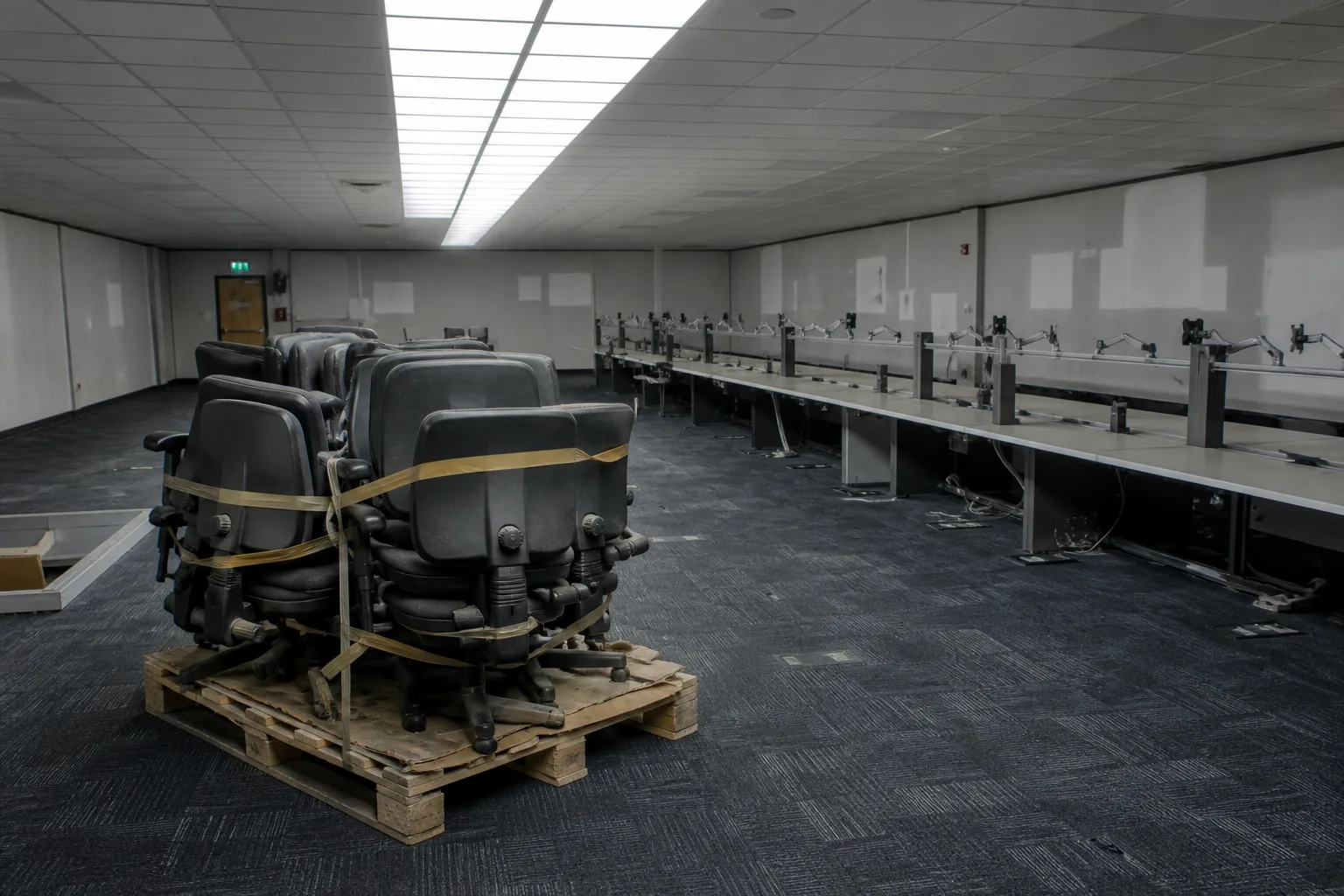
The approval queue is a lonely place, and nobody designed it to be.
The system has done the first pass. The recommendation is already highlighted. A clock is running somewhere, even if it isn’t on your screen.
Your name is beside the button that says approve.
You’re expected to be the final check. You’re also expected to answer messages, clear the next case, remember yesterday’s exception, and leave on time.
By the time the case reaches you, the work of deciding has been compressed into the work of agreeing.
You’re not a weak reviewer because you can’t catch every error at machine speed.
Nobody can review an unlimited stream meaningfully.
You’re tired. You’ve got deadlines, children to collect, bills, and a job whose interruptions don’t become less real because a dashboard calls them workflow.
When the system makes an ordinary case look settled, accepting that is a human response to a day already full.
Nothing here wants your job.
The problem is quieter than that.
A person who glances at a model output isn’t necessarily a control. A person who clicks the last button isn’t necessarily the person who decided.
1994 — You type the numbers into the ledger. The total is yours because your hands made it.
2007 — The system validates the fields. You still see the number it refuses.
2023 — The model recommends. The explanation sounds like the conclusion.
2026 — You click approve, knowing the queue has already moved on.
Your title hides the unit
For decades people described computerisation as if it arrived for occupations.
Accountants.
Clerks. Factory workers. Designers.
The employment record says something more awkward and much more useful to you. Technology moves through tasks.
Your job is a bundle. Inputs, repeatable transformations, decisions, exceptions, hand-offs, quality checks, communication, accountability.
A system can take one part of that bundle and leave you holding the part that hurts to name.
Across the United States between 1970 and 1998, labour input moved toward nonroutine cognitive work and away from routine cognitive and manual work. Computerisation explains roughly 60% of the demand shift that favoured college-educated labour over that period.
The word doing the work there is relative. It doesn’t mean a credential keeps you safe.
It means the work around the machine didn’t distribute itself evenly.
Ask the typesetters. The travel agents. The translators.
Not because their work vanished in one clean historical scene. Because a title can survive while its routine centre is hollowed out, and what’s left becomes more exposed, more exceptional, more contingent.
Which is why “this will augment the team” isn’t yet a description. It’s a claim that needs a unit.
Which task gets faster? Which task is newly required? Who checks the result?
And what happens to your released time — better service, a bigger queue, fewer hires, fewer people?
Capacity and headcount are not the same event. Neither is a glowing demo and a complementary job.
Not a spare part
The modern version of that division has a flattering name. Human in the loop.
It sounds like a job description. It can mean a radiologist who sees the image, the clinical history, the model mark and the original study before signing a report.
It can also mean you, receiving a polished draft with a green confidence badge while the next ticket lands.
Those aren’t two versions of the same safeguard.
In one study of chest-trauma patients, AI-assisted radiologists reached 94.2% sensitivity for rib fractures against 69.2% for standard double reading.
The point isn’t that medical AI works. The point is that the human role is visible. Inspect the image. Consider the history. Turn the aid off. Record disagreement. Get another reader where the protocol demands one.
The machine supplies a mark. The person still has something to look at, and a way to disagree.
Now compare a review queue built around throughput.
An eight-minute case doesn’t become a one-minute case because the first draft took one minute. If you spend four minutes checking sources, correcting a policy exception and recording what happened, the model moved the work. It didn’t remove it.
Sent unchanged. Materially edited. Rejected. Escalated. Those are four different outcomes, not four moods.
That’s the correction. You’re not the human in the loop because your name is on the screen.
You’re one only when you can change what happens next.
Advice is not evidence
The trouble isn’t only that a model can be wrong.
It’s that advice changes a correct human judgment, in the exact person who was retained to prevent that.
Automation bias has two names for how it gets you. A commission error is following bad automated advice. An omission error is failing to act because the aid didn’t flag anything.
Across prospective clinical studies, consultations where the advice made a decision worse ran somewhere between 6% and 11%.
You don’t have to be gullible for that to happen to you.
Monitoring gets less likely under high workload and competing tasks. Give a reviewer several queues and they get less effective as output rises.
The volume promise quietly defeats the human promise. More outputs. Less attention. A signature at the end.
Confidence makes the trap look scientific.
In one study of people solving logic puzzles, well-calibrated confidence displays raised accuracy by twenty percentage points. Miscalibrated ones produced almost nothing, and increased both overreliance and underreliance.
A percentage beside an answer isn’t evidence because it has a percent sign. It’s evidence only if it’s calibrated for this task, this population, this setting. And only if it lets you act.
Order matters as much as content.
An independent first judgment gives you something to compare the recommendation against. A recommendation-first screen saves you time and anchors the judgment it claims to assist.
Across preregistered experiments, people leaned harder on algorithmic advice as the task got objectively harder. The cases where you most want help are the cases where independent verification is hardest.
Sending those to one rushed person isn’t a solution. It’s a transfer.
Make the complement real
There’s no general law that a human and an AI together beat either one alone.
A preregistered meta-analysis of 106 experimental studies found human-AI combinations performed worse, on average, than the better of human-alone or AI-alone.
They did better at content creation and worse at decisions.
Which makes sense once you say it plainly. A draft is an object you can push back against. A recommendation arrives already pretending to be the reason.
So configuration is the whole story.
In a mammography model, using AI as a second reader or a high-confidence filter improved sensitivity and cut human reads sharply. The same model also degraded performance through automation bias in multi-reader settings.
One model. Four positions — first, second, beside you, or between you and the cases you’ll never see. Four different interventions.
And the remaining work has to be counted honestly.
Concurrent assistance reduces your reading time on every case. Pre-screening reduces the number of cases and leaves you a smaller, harder residue.
Those are not interchangeable savings. Route 95% of the work automatically and your specialist gets the 5% most adverse, ambiguous and emotionally difficult.
Fewer cases is not necessarily less work.
Here’s where oversight becomes either a control or an alibi. You need time proportionate to the error class. Source excerpts, not a bare conclusion. A short dissent path. Authority to stop or alter the result. A fallback when the system is uncertain or absent.
Contradictory policy text should route to a specialist. It shouldn’t become an invitation for the fluent answer to choose.
And when the assistant fails, the approved knowledge base and the manual template still have to work. A service outage can’t be allowed to become a customer-service outage.
NIST’s AI RMF names four cross-cutting functions — Govern, Map, Measure, Manage — and treats governance as continuous rather than a signature at the start.
Its playbook wants human oversight documented through what actually happens downstream. Overrides. Reported errors. Response time. Adjudication.
That’s not paperwork bolted onto the real system. It’s the evidence that your part of the system exists at all.
If nobody can see the source, dissent, wait, intervene or recover, then your employer hasn’t kept a person in the loop.
It has kept a name at the end of one.
You may still be useful to the system. You may be indispensable to it.
But usefulness isn’t authority. Presence isn’t evidence. A click is not a decision.
The old computerisation record isn’t a prophecy that your job disappears. It’s a warning against taking your title as the unit of analysis.
The human-AI record adds the sharper one. Complementary work becomes a safeguard only when the complement can really see, really decide, really refuse, and really repair what the system has done.
Everything else is a job description for whoever carries the blame after the queue has moved on.
Put this to work
- Task exposure differs from a forecast that an occupation will disappear.
- Automation bias and complacency can make a review step less valuable even when a person remains assigned to it.
- Meaningful override requires time, inspectable evidence, and authority to alter the outcome.
- Fallback and recovery must be assigned when a model is uncertain, unavailable, or wrong.
- Verification, exception handling, and escalation are work and belong in an augmentation evaluation.
- Reader order and confidence presentation change whether human-AI collaboration improves a decision.
Questions
- Does task exposure mean an occupation is going to disappear?
- No. Task exposure identifies parts of work that a technology may perform or change; it does not forecast the disappearance of an occupation. A workflow can lose routine extraction while gaining exception diagnosis, source checking, customer communication, quality assurance, or system-control work. Employment, hours, wages, output, and headcount are separate outcomes and require separate evidence after deployment.
- Why is a person clicking approve not automatically a control?
- A click is a control only when the person can inspect the relevant evidence, understand the proposed outcome, reject or alter it before it takes effect, and use that authority without an impossible time constraint. A reviewer who sees only a recommendation, has no access to source material, or cannot stop the next step provides accountability theatre rather than independent oversight.
- What are commission and omission errors in an AI review?
- A commission error occurs when a person follows incorrect automated advice. An omission error occurs when a person fails to act because an automated aid did not flag a problem. The distinction matters because a system can worsen a decision that was initially correct, or can prevent a reviewer from noticing a case that required action. Both errors need separate measurement.
- Why can a confidence score make a human review worse?
- A confidence score helps only when it predicts actual correctness for the relevant task and population, is understood by the reviewer, and changes an action the reviewer is permitted to take. An overconfident or poorly explained score can anchor judgment and make contrary evidence less visible. A number without an error history, class definition, or inspectable case is persuasion rather than useful evidence.
- Does putting a human and AI together always improve the result?
- No. A preregistered meta-analysis of 106 experimental studies and 370 effect sizes finds that human-AI combinations, on average, perform worse than the better available human-alone or AI-alone comparator. Collaboration remains useful in particular configurations, but an answer plus a reviewer does not establish a gain. The relevant unit is the configured team, task, information order, and decision rule.
- What makes an override meaningful?
- A meaningful override gives the reviewer enough time to examine the case, access to source excerpts and record provenance, a visible way to dissent, and authority to change or stop the outcome. It also records the override, reason, response time, and later result. A review step without those conditions cannot reliably test a recommendation, especially when workload or case difficulty is high.
- Why does the order of human and AI review matter?
- Recommendation-first interfaces save time but can anchor later judgment. An independent first judgment preserves a comparison point, while a second-reader design can surface disagreement and missed findings. A first reader, second reader, concurrent aid, and high-confidence filter all assign different work to the person. Reader order therefore changes verification burden, error detection, and the meaning of a final human signature.
- What happens when a model is uncertain or unavailable?
- The workflow needs a named fallback that remains usable without the model: a manual template, approved knowledge source, specialist route, second human reader, or controlled audit category. Contradictory source material routes to a specialist rather than being resolved by fluency. Recovery is part of the operating design because an unavailable or uncertain system cannot leave a customer, case, or decision without an accountable path.
- Is verification work part of the cost of augmentation?
- Yes. Automation can remove routine search or motor work while leaving monitoring, evidence review, exception resolution, intervention, and accountability. Those tasks can be more cognitively demanding than the average work that disappeared. Evaluation therefore counts evidence views, edits, overrides, escalations, time to resolution, post-decision corrections, and reviewer workload instead of treating gross throughput or model accuracy as the whole result.
- Why does a productivity result not prove that workers have been augmented?
- A productivity result shows one measured outcome in one configuration; it does not show who performs the new verification work, whether workload has intensified, whether staffing changed, or who receives the gain. In field data from roughly 5,000 customer-support agents, a conversational assistant increased issues resolved per hour by 13.8%, but that result does not establish the verification burden for every queue or customer type.
- What should be counted after a task is automated?
- The evaluation counts task minutes removed, task minutes added, output per worker, headcount or hours, quality, rework, customer or production volume, and distribution of gains. Released capacity can become better service, higher volume, a smaller backlog, fewer hires, or a staff reduction. These are different outcomes, so a reduction in one routine task does not by itself demonstrate a labour saving.
- Why are the hardest cases a bad place for a rushed human handoff?
- People rely more on algorithmic than social advice as tasks become objectively harder, according to three preregistered experiments involving 1,500 participants. Hard cases also make independent verification more difficult. Routing only those cases to a rushed person can therefore concentrate uncertainty where checking is least feasible. The interface must reduce evidence-search cost, provide another judgment source, or change the decision rule.