Make the productivity claim prove itself.
AI is not replacing the call centre. It is moving work into the exception queue.
Deflection removes the cleanest contacts first and makes the remaining queue feel harder, angrier and more expensive. The human role changes from answering everything to catching the cases the system made consequential.
What it feels like
The tiredness of reaching a person only after proving to a machine that the problem is unusual.
You are not being handed a smarter queue. You are being asked to carry the risk the queue cannot classify.
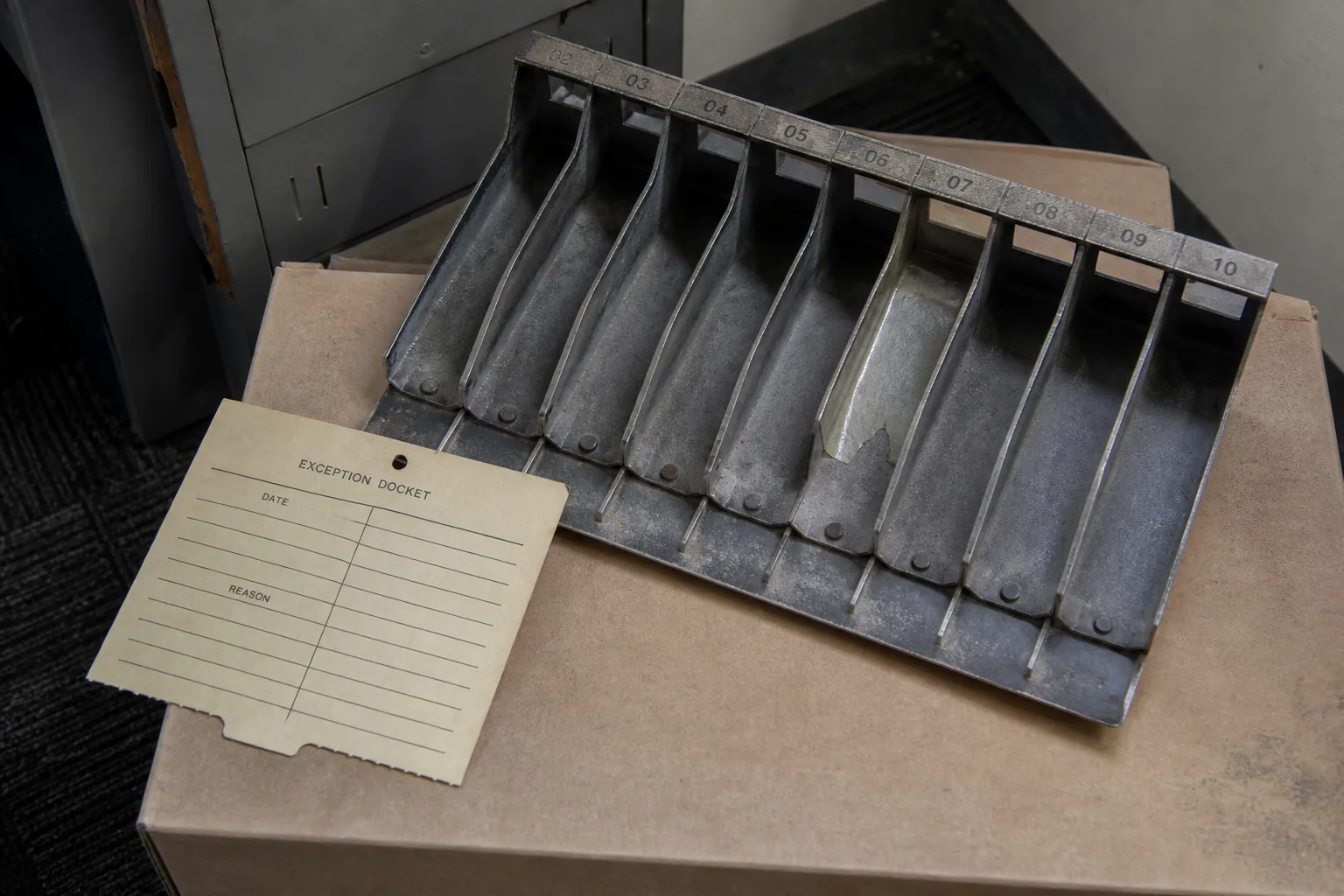
You have to become exceptional before anyone will speak to you. It’s a specific kind of tiredness.
Not angry, at first. More like explaining that you’ve already restarted the modem, then listening while a bright recorded voice asks whether you’ve restarted the modem.
You’re not difficult because the standard path didn’t fit you.
You’re tired. There’s a service down, a customer waiting, a shift that ends when it ends, and parts of a life that don’t pause because an IVR wants one more answer.
Taking the status page, the chatbot, the callback, the suggested fix — none of that is a failure of discernment. It’s what you do when you need the thing to work.
The frightening version would at least be interesting.
Something plainer is happening.
The call centre isn’t disappearing. It’s being sorted.
The clean contacts leave first. What’s left is the contact the system couldn’t settle without making a judgment, taking a risk, or admitting its categories were too small.
2009 — You press zero until the menu gives up.
2016 — The chatbot offers the same three answers.
2023 — An agent suggests the response while a human reads it.
2026 — The human is there only when the answer can hurt someone.
The clean calls leave first
Your contact starts before a person answers.
A status page, an account app, an FAQ, a callback form or an IVR can spot an outage, authenticate you, collect a symptom, offer a routine fix.
That’s genuinely useful. It also isn’t a completed transaction just because a menu played.
Most customers try self-service. Only a small fraction of issues get resolved by self-service alone.
That gap is where the human queue begins.
Take a broadband fault. The status page says no area outage. The IVR checks the registered line, asks about modem lights, offers a reboot sequence.
When that fails it creates an interaction record. The record needs your chosen issue, your authenticated status, the steps you already tried, your language.
Without those, “digital first” means you do the discovery twice. Once for the machine, once for the person who inherits its failure.
Then the automatic call distributor turns you into a queueable kind of work.
It reads the dialled number, your IVR choices, your identity, your language, the opening hours, maybe a predicted intent.
It can route urgent safety cases first, technical failures to a technical queue, and someone who has already tried self-service to a person rather than another menu.
A good scorecard separates concluded, transferred, redirected and escalated conversations. Those aren’t four ways of saying the contact went away.
That distinction is the first thing a green dashboard hides.
A transfer to network support is right when it carries your broadband fault onward. It’s a failure when the first agent repeats the IVR’s questions.
A redirection to self-service can help with a new, simple request. It doesn’t help when you’ve already done the steps and the record can’t see it.
Routing is a promise about the next competent action.
Not about the shortest line.
Here’s what deflection does when it works. It removes the calls where the available categories, instructions and authority were enough.
And it changes the composition of what’s left.
Your exception queue isn’t the old queue with fewer bodies in it. It collects the mismatched record, the failed prior attempt, the account carrying a consequential promise, the person who needs somebody to decide rather than retrieve.
Fewer calls, heavier work
Contact-centre staffing was never a headcount divided by an average day.
Workforce management forecasts contacts and average handling time by interval, applies a service objective, and schedules qualified people around the shape of arrival, absence and skill.
Erlang C assumes random arrivals, first-available assignment, first-in-first-out service, unlimited queueing, and nobody hanging up.
That last assumption is exactly why the model gets less descriptive once a queue is already upsetting people.
Capacity is an interval problem. Removing easy calls at midday doesn’t create a specialist at five o’clock when a fault surge arrives. It doesn’t conjure a language-qualified agent when the remaining work needs one.
The payroll arithmetic is just as stubborn. A hundred productive agents at 40% shrinkage needs about 167 scheduled agents.
Training, coaching, meetings, breaks, leave, absence, downtime. Not all of that is waste waiting for an algorithm to expose it.
Some of it buys future quality and resilience.
Minimum shifts, specialist coverage, supervisory span and contracted overflow all survive a fall in simple demand. Those are step costs. They move in chunks, not smoothly with every call avoided.
Which is why your volume chart can shrink while your day gets harder.
An email interaction runs around three and a half minutes. A rise to five may mean bad tools. It may also mean a required disclosure, a fuller diagnosis, a more complex case, or a record completed properly instead of left for the next contact.
Lower handling time isn’t a moral fact about you.
It’s a time measure with consequences.
The old promise was that self-service would take the repetitive work. The current promise is that AI will give whoever remains a faster answer.
Both can be true. Neither one says who absorbs the cases that can’t be safely standardized.
That’s the correction.
You’re not being handed a smarter queue.
You’re being asked to carry the risk the queue couldn’t classify.
The draft and the check
The sensible use of an assistant in customer service is modest. Retrieve approved knowledge.
Summarize the case. Compose a proposed reply.
You keep the relationship and the outbound communication. Account changes, promises, exceptions and sensitive disclosures stay behind your authorization.
The outcome that matters is time to resolution and recontact rate. Not how many prompts a system completed.
And there’s good reason not to dismiss the help. Field data from around five thousand support agents found a conversational assistant raised issues resolved per hour by 13.8%.
Those agents could use the suggestion or ignore it. That’s an outcome in a defined interface, not a law saying your review step is free.
So take an eight-minute queue. A one-minute draft isn’t a seven-minute gain if you then spend four minutes checking sources, correcting a policy exception and documenting the disposition.
The work didn’t disappear. It changed posture.
Less typing, more proving. Less retrieval, more judgment. Less routine explanation, more ownership of what the explanation causes.
Which is why your handoff has to carry more than fluent prose.
The draft screen should show the article title, the version date, the customer facts used, the policy boundaries. Send has to be a different button from save draft.
And the system records whether you sent it unchanged, materially edited it, rejected it, or escalated.
If retrieval returns contradictory policy text, the case goes to a specialist. Asking a rushed agent to pick the more confident paragraph isn’t oversight.
It’s laundering uncertainty through a person.
The fallback matters too, because your assistant can fail at the same moment the customer needs it.
Your knowledge base and manual template have to stay usable when the assistant is down. Otherwise an outage in the helping system becomes an outage in the service.
You can’t own the exception if the evidence, the route and the ordinary tools vanish with the automation.
Presence is not design
It’s comforting to say a human remains in the loop. It’s also incomplete.
The exception queue creates the hardest version of that mistake.
People lean harder on algorithmic advice as tasks get objectively harder. And hard cases are the ones where independent checking costs the most attention.
So the system routes uncertainty to the person least able to inspect it quickly, then calls their presence a control.
Advice can make a correct judgment worse. Follow bad advice and that’s a commission error. Fail to act because the aid flagged nothing and that’s an omission error.
In prospective clinical studies, consultations where the advice made the decision worse ran between 6% and 11%. Different domain. Familiar mechanism to anyone who’s watched a plausible answer crowd out the question it should have raised.
So make the burden visible. Count cases received, evidence views, override rate, edits, escalations, time to resolution, post-decision corrections, reviewer workload.
Count the customer who came back because the message was calm and wrong. Count the promise that pushed work into another system with nobody accepting the handoff.
A model dashboard can’t tell you whether your role got safer, thinner, or merely more accountable for a system you can’t properly check.
What counts as success
Your centre already has the language for honest closure. Response time, abandonment, transfer, handling time, quality, repeat contact, and whether the fault actually got fixed.
Ofcom’s 2024 mobile-provider data reports average call abandonment at 6%, down from 8% the year before. That isn’t a broadband-fault target. It’s a reminder that even a familiar measure needs a stated denominator before anybody offers it as a verdict.
The same goes for self-service. A centre can get very good at showing that calls got shorter or left the phone channel altogether.
What it still needs is a deflection ledger. Attempted self-service. Successful completion. Assisted completion. Bounce to agent. Repeat contact. Customer outcome.
You never experienced a contact as deflected. You experienced your original need as completed, delayed, or abandoned.
And the money doesn’t follow the lower call count on its own.
The bridge is eligible contacts times genuine self-service completion, times agent minutes avoided, times capacity that can actually be redeployed or removed. Then subtract digital run cost and new failure work.
If peak coverage still needs the same minimum people, routine demand buys you service and resilience without cutting cash. That’s still a benefit.
Calling it a payroll saving before the spending changes is how your exception queue becomes invisible.
The old call centre didn’t become humane by learning to route. It became legible.
Somebody could see the queue, name the skill, time the wait, audit the handoff, and ask whether the downstream promise actually happened.
AI can make the standard path gentler. It can spare you the tenth identical question. It can make a good agent faster.
But the customer who reaches you after the machine exhausted its categories hasn’t arrived at the edge of your service.
They’ve arrived at the part where the service becomes consequential.
The work left there isn’t answering everything. It’s catching the cases the system made important.
That was never a failure of the queue. It’s what the queue was always hiding.
Put this to work
- Self-service, IVR, routing, staffing, handling, quality review, and downstream closure all shape one inbound contact.
- A contact counts as deflected only when self-service completes the customer need at the intended quality without agent support.
- Lower routine volume does not automatically remove payroll cost because staffing, shrinkage, skills, peak coverage, and step costs remain.
- A customer-service assistant needs source context, a visible edit disposition, separate send authority, and a manual fallback.
- Verification effort, overrides, edits, escalations, recontacts, and post-decision corrections are part of the cost of human-AI work.
- Abandonment, AHT, and a lower call count can look green while repeat contacts and unresolved downstream outcomes show customer failure.
Questions
- What counts as a call being genuinely deflected?
- A call is genuinely deflected only when self-service completes the customer need at the intended quality without agent support. A menu, chatbot, status page, or IVR does not count merely because it handled the first interaction. The outcome must distinguish attempted self-service, successful completion, assisted completion, bounce to an agent, repeat contact, and the customer outcome.
- Why does a lower call volume not automatically mean fewer staff?
- Lower call volume does not automatically reduce payroll because contact centres staff by interval, required skill, service objective, shrinkage, and peak coverage rather than by a daily average alone. A minimum staffed shift, language coverage, specialist availability, and supervisory span create step costs. Reduced routine demand can improve resilience or service before it removes a rostered position or supplier cost.
- Why does the queue feel worse after self-service gets better?
- Self-service removes routine needs when it works, leaving agents with a higher share of ambiguous, adverse, emotionally difficult, or consequential cases. The remaining queue can therefore have fewer contacts but greater evidence-search, decision, and recovery work per contact. Comparing its case count or average handling time with the former mixed queue conceals the changed cognitive and service burden.
- What information should follow a customer from self-service to an agent?
- A handoff carries the chosen issue, authenticated status, attempted steps, language, prior contact, and applicable case context. That information prevents an agent from repeating discovery already completed in self-service. A visible exit to a person matters when the route cannot complete the need, and a customer who has already tried a routine fix should not be forced through it again.
- Is a quick answer the same as a resolved customer problem?
- No. Average handling time measures conversation, holds, transfers where measured, and after-call work according to the centre’s definition; it does not establish that the underlying need is complete. Resolution requires the accepted next action and the downstream outcome, such as a restored service, successful technician visit, or absence of a repeat contact for the same fault.
- What does an AI assistant need to show a customer-service agent?
- A customer-service assistant shows the approved article title, version date, customer facts used, and policy boundaries alongside a proposed reply. It keeps sending separate from saving a draft, records whether the response was unchanged, materially edited, rejected, or escalated, and routes contradictory policy text to a specialist. The same knowledge base and manual template remain usable during an assistant outage.
- Why is a one-minute AI draft not necessarily a seven-minute saving?
- In an eight-minute average-handle-time queue, a one-minute draft does not create a seven-minute gain when an agent spends four minutes checking sources, correcting a policy exception, and documenting the disposition. The relevant measure is whole-workflow time to resolution and recontact rate. Draft production can transfer labour from writing to verification rather than remove it.
- Can a person reviewing AI output make the service automatically safer?
- No. Human-AI combinations do not automatically outperform the better human-alone or AI-alone comparator. Review can become weaker when advice anchors judgment, evidence is hidden, or the reviewer is overloaded. The design needs an independent role, accessible source evidence, a way to disagree, and measurement of overrides, reported errors, response time, adjudication, and later corrections.
- What should happen when the assistant finds conflicting policy information?
- When retrieval returns contradictory policy text, the case routes to a specialist rather than asking an agent or model to select the most fluent answer. The human handoff includes current evidence, the policy boundary, the action permitted, and authority for the next decision. A confident recommendation is not a reason in itself when the decision must be explained to a customer or colleague.
- Which measures expose a call centre that looks efficient but feels broken?
- A centre can report low abandonment, low average handling time, and fewer calls while customers still repeat contact or fail to receive the promised downstream outcome. The operating view therefore combines response time, abandonment, transfers, handling time, quality, repeat contact, fault outcome, attempted self-service, successful completion, bounce to agent, and customer outcome. Each measure needs a stated definition and denominator.
- Why do automated confidence scores need checking?
- A confidence score helps only when it is calibrated to observed correctness for the relevant task and population, users understand what event it describes, and it changes a permitted action. A score without the class definition, error history, or evidence to inspect can become a persuasion cue. Systems also need to communicate abstention and unsupported boundaries.
- Who owns a case after an automated handoff?
- The receiving queue or specialist owns the next competent action after accepting the handoff. A contact centre case is not complete merely because an agent created a dispatch or escalation; the customer experiences resolution only when the receiving system accepts the work and the promised next action occurs. Clear ownership distinguishes a real handoff from a reassuring entry in a call log.