Decide what to keep. Know what to move.
AI does not end offshoring. It removes the easy cases first.
Offshoring was never simply a wage differential; it was a controlled transfer of bounded work, followed by a stubborn population of exceptions. AI is likely to compress that first layer and make the remaining coordination, quality and authority work more visible.
What it feels like
The uneasy arithmetic of realising that the work has not gone away, only the easy proof that it needed you has.
You are not the residue after automation. You are seeing the part of the service that was never a location strategy.
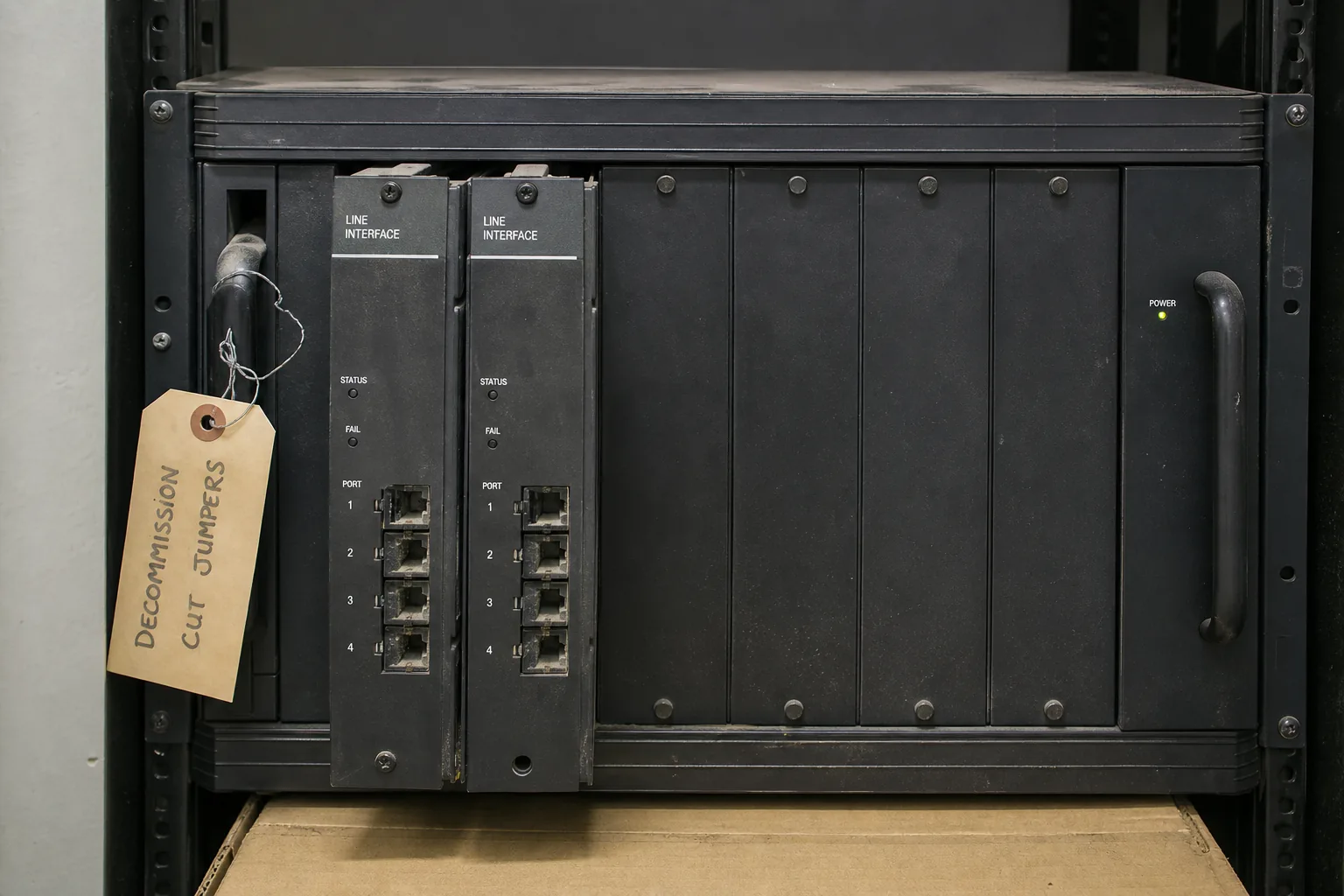
The part of your work a machine can do turns out to be the part you were once paid to prove mattered.
Not dread like a siren.
Not even dread like a redundancy meeting.
More like the small blank feeling after an invoice that used to take an afternoon has matched itself, routed itself, and left you the awkward email.
You didn’t make that trade carelessly.
You had a queue, a supplier waiting, a manager asking for an answer, and other work that turned urgent while the invoice sat there.
The standard case was never a sacred test of your professional worth. Letting a system take it isn’t a failure of vigilance. It’s what you do to make a day hold together.
There’s a version of this with a villain in it.
It’s the wrong version.
AI doesn’t end offshoring. It removes the easy cases first, then makes what remained visible enough to name.
2002 — An invoice waits on your desk while somebody looks for the missing receipt.
2010 — It joins an offshore queue. The record moves. The payment approval doesn’t.
2019 — Matching invoices pass through without a person. The disputed ones arrive with an email thread.
2026 — The agent handles the email too. The disputed ones still come back with your name on them.
The case was always smaller
Offshoring never really moved “finance” to another country.
It moved a defined case.
In the invoice-exception example, the buyer separates purchase-order matches from cases needing document recovery, tax interpretation, disputed quantities, or payment approval.
Your first offshore unit gets a trigger, standard inputs, a named output, a decision right, and a fallback.
“Accounts payable” is a department. “Obtain the missing receipt, classify the reason code, return a payment-ready record or an escalation” is a service.
That distinction wasn’t a semantic luxury. It’s how a distant delivery queue works without quietly inheriting the right to waive your policy or change bank details.
So your retained team recorded volume pattern, service promise, systems touched, information types, decision rights, historical exceptions.
US bank third-party guidance frames the relationship in five stages.
Planning. Due diligence and selection.
Contract negotiation. Ongoing monitoring. Termination.
The sequence matters, because a service that can’t explain its exit was never fully specified when you entered it.
The 2023 Deloitte survey found 84% of participating Latin American centres were multifunctional. Finance, HR, procurement and other work sharing a location and a management line.
Sharing a building never made the work interchangeable. Another 57% delivered in more than one language, and that reaches into supplier correspondence, templates, reason-code interpretation, quality review and escalation.
Your agent pitch begins at exactly this old seam.
It doesn’t automate your job.
It proposes a service boundary.
A customer-reply feature starts with password resets and billing explanations, not “improve customer service with AI.” It states which sources it may use, what it must never answer, what stays human-only, and what event ends the pilot.
The parallel isn’t that an offshore operator and a model are the same thing.
It’s that neither can be held accountable for a function you never bothered to define.
The easy cases go first
There’s an accusation hiding in this history. That people should have fought harder for the routine work.
It’s unfair. Your routine work was always hard precisely because it’s repetitive, interruptible, and easy for everyone else to call simple.
You weren’t complicated because a record needed a receipt, an approved source, a reason code, and somebody entitled to release payment.
You were carrying the joins between all of those.
The offshore flow made your joins visible.
A case entered with an identifier, supplier context, permitted attachments, a due date, a reason for failure. The delivery agent could retrieve allowed evidence, use an approved supplier channel, resolve the record, or assign an escalation reason.
Questions, policy exceptions and approval requests travelled back to you.
A diagram that only showed the work leaving was a diagram of labour transfer.
Not a working service.
AI compresses the standard layer further.
A production drafting service retrieves an approved knowledge base and prepares a reply while you stay accountable for sending it.
It needs your baseline before rollout. What arrives each week, how long a case takes, how often it comes back, what it costs to finish.
And an acceptance threshold, a maximum unsupported-answer rate, and a human review method, all agreed before the results start flattering anybody.
That’s why your agent’s speed can feel like a private judgment when it’s really a sorting decision.
The matching invoice no longer needs a desk. The routine reply no longer needs a first draft.
What’s left in your queue has incomplete information, a stale rule, an unusual account, disputed facts, or a decision nobody safely delegated.
The work didn’t vanish. The proof that it belonged to a general queue did.
And this didn’t start with the current model. More than 54% of respondents to that Latin American survey reported savings above 10% after robotic-process automation.
That isn’t an offshoring return figure and it doesn’t predict an AI one. It records the same pressure.
Once a stable substep gets automated, the delivery model has to be re-priced around the work that can’t yet be made routine.
Parallel work was never waste
The old transition cell knew something your current demo keeps trying to forget. The first production service is not the finished service.
Subject-matter experts, a transition lead, technology support, control reviewers and trainers watched your representative cases, built procedures, defined reason codes and approval thresholds, tested access.
Then the new team worked beside your team while its output got checked.
That parallel run cost money because it prevented the far more expensive discovery that a process had been misunderstood, found only after scale.
In that same survey, 80% of participating centres reported recovering their investment within two years. Self-reported regional evidence, not a promise about anybody’s proposed centre.
Its lesson is duller than the number. Your business case has a period, assumptions, and a dip before the run rate arrives.
Training, access, process mapping, security review, workshops, configuration and parallel work don’t become free by being called transformation.
Your AI release has the same second queue around it.
Your first production group is small and trained. Supervisors sample outputs and compare service measures against the baseline. They watch recontact and escalation, not whether anybody opened the feature.
How many cases were eligible. How many drafts appeared. How many went out untouched, how many were rewritten, how many were overruled. Those aren’t six ways of saying adoption.
They show where the service is trusted, corrected, avoided, or quietly made safe by a person.
Your data has to survive the same test.
A governed data product has a named owner, defined meaning, access rules, current sources, and a way for you to repair a defect. A held-out evaluation set keeps representative cases away from development examples.
A system tested only on polite, ordinary requests hasn’t met your queue.
It’s met the part of your queue that was already asking to be removed.
The saving has an older bill
The visible price is designed to reassure you. The offshore version was a lower wage. The AI version is a lower query price.
Offshoring’s total delivered cost included compensation, benefits, management, facilities, tools, quality assurance, training, and exception time on the retained side.
Vendor invoices carried retained process ownership, contract management, security and legal oversight, integration, reporting, and the work that leaked back to the client.
Attrition brought recruiting, onboarding, trainer time, manager time, lost productive time, quality risk, your overtime.
In the same 2023 survey, 62% reported annual productivity improvements and 77% had continuous-improvement teams. Those gains had staff and tools attached. They weren’t ambient weather.
Your production AI ledger has the identical layered shape.
Model inference, seats, storage, compute, security tooling, supplier support. Then product and process-owner time, data engineering, integration, evaluation, legal, procurement, training, monitoring, help desk, incident response.
Then change. Redesigning the work, running in parallel, auditing output, absorbing errors.
The cost moved from the invoice line to the service boundary. It didn’t become an API fact.
And a faster case doesn’t become cash by being faster.
Capacity becomes a saving when spending changes. A hire avoided. Your overtime cut. A site closed. A supplier contract stopped.
With fixed staffing and flat demand, it buys you resilience, throughput, better service, or time for different work.
Those can be excellent reasons. They’re not the same reason.
The exception tells the truth
An offshore centre could look productive while pushing difficult work back to local approvers.
Which is why your daily loop counted completed volume, aged cases, errors, rework, access issues and open escalations, while quality reviewers sampled against the procedure.
The scorecard linked timeliness, first-pass accuracy, rework, exception age, supplier impact, staffing stability and control results.
A target without its countermeasure teaches your queue where to hide its failures.
The AI equivalent isn’t a model score. It’s a metric tree.
Technical measures: availability, latency, supported-answer rate, policy violations. Workflow measures: completion, quality, rework, escalation, cycle time. Business measures: cost per completed case, loss rate, retention, service level.
A rise in prompts proves less than a completed case. A drop in latency proves less than a correct outcome.
That’s the correction. You’re not the residue after automation.
You’re seeing the part of the service that was never a location strategy.
Your exception wasn’t created by being complicated. It was always in the work, waiting for the standard process to reach its edge.
The final decision was never whether you believe in the tool. It’s whether the measured service extends, holds its scope, or retires.
Ask the local systems. The retained approvers. The people reconstructing the disputed invoice after every clean case has gone elsewhere.
They aren’t waiting for automation to finish. They’re already holding the part of the service automation made impossible to ignore.
Put this to work
- An offshore unit is defined by its trigger, inputs, outputs, decision right, and fallback rather than by a whole function name.
- Parallel operation protects service and exposes missing knowledge, ambiguous rules, and access gaps before a new delivery model scales.
- Total delivered cost includes transition, coordination, rework, retained oversight, technology, and attrition as well as wages or model consumption.
- The process owner retains exception authority, quality evidence, approval rights, and the measures that show whether difficult work is being pushed upstream.
- An enterprise AI pilot needs a baseline, defined acceptance thresholds, a governed data product, and a decision to extend, maintain, or retire the service.
- Lower handling time is capacity evidence; it becomes a cash saving only when spending or output demonstrably changes.
Questions
- Does AI actually end offshoring?
- AI does not automatically end offshoring because both arrangements depend on a defined unit of work, reliable inputs, a quality floor, and a route for exceptions. AI can automate stable portions of a queue that once moved to an offshore team. The remaining service still requires ownership of ambiguous cases, source quality, approvals, rework, and the business outcome.
- What makes a piece of work safe to move offshore or automate?
- A movable unit has a clear trigger, standard inputs, named outputs, a stated decision right, and a fallback when facts do not fit. "Accounts payable" is too broad because it contains matching, document recovery, tax interpretation, disputed quantities, and payment approval. A unit such as obtaining a missing receipt and returning either a payment-ready record or an escalation can be operated and measured.
- Why did offshore teams run work in parallel with the local team?
- A parallel run lets a new delivery team work representative cases while the existing team validates the results. It preserves customer service while exposing missing inputs, ambiguous procedures, access failures, and tacit knowledge before scale makes them production defects. Removing the retained team too early can hide transition cost by converting incomplete knowledge into backlog, errors, overtime, or rework.
- What still belongs with the process owner after work moves?
- The process owner retains the service definition, the decision rights that were not transferred, quality evidence, exception authority, and the measures that connect queue output to business reality. Completed volume alone is insufficient because a delivery team can appear productive while passing difficult cases upstream. Timeliness, first-pass accuracy, rework, exception age, user impact, staffing stability, and control results show the whole service.
- Why is a lower wage or cheaper model query not enough to prove a saving?
- A service costs more than delivery payroll or model consumption. Total delivered cost includes transition, training, parallel work, integration, data preparation, quality assurance, retained process ownership, contract or supplier management, rework, controls, and ongoing support. A lower price becomes a false saving when local reviewers, duplicated systems, exception handling, or new operating costs remain outside the quoted rate.
- When does faster AI work become a real cash saving?
- Lower handling time is capacity evidence. It becomes a cash saving only when the organization avoids hiring, reduces overtime or contractor spending, closes a site, removes a contracted service, or otherwise changes spending. If staffing remains fixed and demand is flat, the benefit may be resilience, quality, throughput, or time for higher-value work. Those benefits can matter without being counted as labor-cost savings.
- What should an AI pilot measure before it expands?
- An AI pilot records a pre-change baseline for request volume, handling time, recontact rate, quality, escalation, and cost per completed case. It defines the allowed sources, human-only work, acceptance thresholds, and a maximum unsupported-answer rate before results are known. Production release then measures eligible cases, drafts shown, material edits, overrides, time-to-send, sampled accuracy, and downstream customer outcome.
- Why can a pilot that stops still be useful?
- A stopped pilot is useful when it identifies missing data, an unworkable service rule, an unsafe quality result, or insufficient benefit before broad deployment. Gartner reported that 41% of generative-AI prototypes and 42% of non-generative prototypes reached production on average in its 2024 enterprise survey. A production decision therefore needs an honest option to fund an extension, maintain the present scope, or retire the service and preserve the finding.
- What is a governed data product in an AI service?
- A governed data product is a maintainable set of data with a named owner, defined meaning, access rules, and a way to correct defects. For an AI drafting service, it identifies the current source of truth for each policy, records document ownership and version, applies the employee's access rule, and lets the organization remove obsolete material or revoke entitlement. Searchability alone does not create reliable operational knowledge.
- Why do exceptions become more visible when the easy cases are automated?
- Automation removes the stable cases from the queue first, leaving cases with missing information, policy interpretation, disputed facts, unusual account types, or retained authority. The exception did not originate with automation; it was already present inside the broad function. Once standard handling is measured separately, the remaining coordination, quality review, approval delay, and source defects become harder to describe as ordinary workload.
- What does an offshore or AI service need before it can be shut down safely?
- A service needs an accountable receiver for its responsibilities, data, staff, open cases, procedures, access roles, metrics, and evidence before it closes or changes hands. U.S. bank third-party guidance describes planning, due diligence and selection, contract negotiation, ongoing monitoring, and termination as five lifecycle stages. The sequence makes exit a design condition rather than a commercial sentence added at the end.
- Why are AI usage figures not the same as business value?
- Usage measures show whether people opened or used a feature; workflow measures show completion, quality, rework, escalation, and cycle time; business measures show cost per completed case, revenue, loss rate, retention, or service level. Each answers a different question. In a 2025 McKinsey survey, 88% reported regular AI use in at least one business function while 39% reported an enterprise-level EBIT impact.