Make the productivity claim prove itself.
The factory learned that variation is not a bug. AI is learning it again.
Industrial automation paid for itself in stable repetition, then met the cost of changeovers, fixtures and unusual parts. Knowledge work has variation too; an agent that treats it as noise can turn a rare case into an expensive error.
What it feels like
The familiar frustration of being called an exception when the exception is simply the actual work.
You are not the variance in the way of the plan. You are the evidence the plan has a boundary.
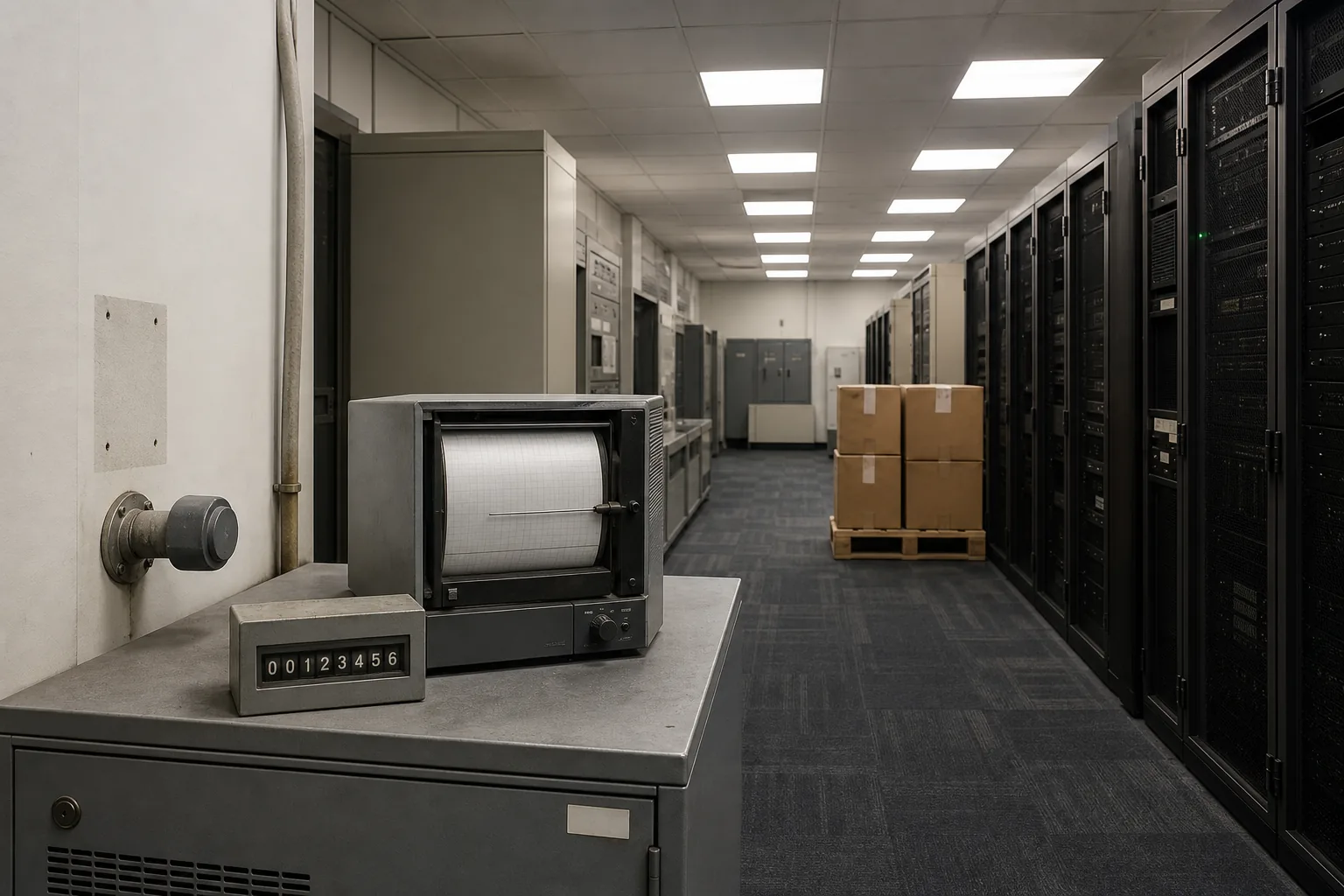
A system built around your work has started calling you an exception.
The request is real.
The document really is different.
The supplier really did change its name.
The part really does arrive with a different surface, a different orientation, a different reason the usual grip won’t do.
And yet the word lands as though the trouble were you, for failing to resemble the form.
You’re not difficult for bringing the actual case.
You’re not obstructing anything by noticing that the normal route has a boundary.
You’ve got a deadline, other people waiting, and a job made of things that looked ordinary right up until they weren’t.
When a tool offers to take the standard work away, taking it is sensible. The resentment arrives later, when the standard route declares the rest of your work a defect in you.
No grudge, no uprising, no drama. Just honesty in a specification.
A machine can be useful precisely because it has a boundary. It gets dangerous when it hides one.
1989 — A machine runs the same part all shift. The operator knows the sound it makes when the cycle is wrong.
2006 — A new part needs a new fixture. The old promise of repetition meets the physical fact of shape.
2023 — The assistant handles the standard request. It feels like getting an afternoon back.
2026 — Your unusual case becomes the reason somebody says the system failed.
The cell knew its job
Industrial automation learned this where variation has actual weight.
Your precision-machining shop, running several related housings in short uneven batches, doesn’t buy a robot to automate a factory. It proposes a machine-tending cell.
A bounded arrangement that loads a CNC machine, checks orientation, starts the cycle, unloads the part, routes it onward.
And the promise has to name your housing variants in scope, the planned batch range, traceability, the unattended interval, and your manual fallback.
That isn’t caution theatre. That’s the thing being bought.
The workflow starts with a tote of parts and includes presentation, loading, clamping confirmation, machining signal, unloading, inspection disposition, rework, and the point where you step in.
Metal and machinery customers made up 16% of industrial-robot installations in 2024. Evidence of a substantial use case. Not a reason to pretend every loading task shares one economic shape.
A sales video makes all of that feel cruelly old-fashioned.
The robot places a clean part into a clean machine. The door closes. The arm returns.
But your cell has to meet the part that arrives skewed. The empty nest. The fixture that isn’t fully closed. The failed vision result. The interrupted machine cycle. The full outfeed tote.
Those aren’t acts of sabotage by the factory. They are the factory.
So your specification contains more than a robot’s reach.
Workpiece mass and geometry. Payload. Gripper confirmation. Chuck interface. Door and cycle signals. Collision recovery. Marking requirements. And the safe response to a dropped part.
Acceptance is where this stops being a promise.
Your test uses production-intent material and agreed conditions. A target cycle range, reject behaviour, signal response, recovery sequence, and retained evidence for every variant.
A cell that only succeeds with a perfect part and continuous feed has passed a demonstration.
It hasn’t passed production. And you can’t see that difference from outside the guarding.
Returning to ready is expensive
The robot arm was never the economic unit. The cell is.
Your initial bill includes controller, end-of-arm tooling, fixtures, material presentation, sensing or vision, guarding, safety controls, electrical and pneumatic work, programming, integration, installation, testing, documentation and training.
One industry illustration describes a US$250,000 installation where the robot is about a third of turnkey cost.
An illustration, not a price list. Its warning is that a cheap arm hasn’t made your feeder, your reliable datum, your safe recovery path or your integration work optional.
Then comes the part a stable-repetition model doesn’t want to look at. Changeover.
In variable mix, your interval runs from the last conforming old part to the first conforming new part at normal rate.
Tooling swap. Recipe selection. Vision calibration. Quality approval. Material change. Safe first-off check.
Counting only the minutes spent swapping gripper fingers is like timing the click of a browser button and calling the case resolved.
NIST names large changeover times and limited reusability as central barriers to robotic manufacturing agility.
The arithmetic gets blunt. One changeover per shift produces roughly 250 transitions a year on a five-day, fifty-week schedule. Before anybody counts several products in one shift.
That’s a planning example, not a benchmark. It’s enough to show why transition belongs in your benefit ledger, alongside idle bottleneck time, validation labour, consumables and scrap risk.
The operating ledger is equally uninterested in the clean video.
The same illustration assumes about 7.35 kilowatts average consumption for a medium robot and calculates seventy-five cents an operating hour.
Your real cell also draws on tooling, conveyors, vision, the machine tool, extraction, and idle state. It needs compressed air, wear parts, calibration, support contracts, spares, supervision, quality checks.
And people like you, who feed it, verify it, rework it and recover it.
Automation can move labour upstream and downstream rather than remove it.
Even teaching preserves the boundary. OSHA advises reduced robot speed of 250 millimetres per second or less during teaching.
The exact safeguard follows your risk assessment. The point is less technical than it sounds.
Reconfiguration is still production work. And still safety work.
Your cell doesn’t become flexible because somebody could reprogram it in principle. It becomes flexible when it returns to a safe, conforming first-off reliably enough that you can afford to do it again.
An agent has a part family
The knowledge-work version arrives in softer clothes.
It tells you it can manage a process. It means it can usually handle a route.
Those are not the same promise.
Take the supplier bank-detail agent. Its purpose is narrower than the pitch. Verify and prepare a change.
Its finite set of states is the knowledge-work version of your fixture. It holds a case in a known position while work happens around it.
Your agent can read evidence and create a pending change. It can’t release a payment.
That’s not timidity. A deterministic workflow is usually better when the rule is fixed. Your agent earns its place where documents and a changing case have to be interpreted.
A standard route is a capability. Universal authority is a different product entirely.
And an instruction alone can’t tell those two apart.
Your rule has to start with purpose, then define records in scope, permitted data classes, excluded actions, escalation conditions.
Then it becomes tool allowlists, argument schemas, credential scopes, approval checks, rate limits, state transitions. The lowest layer gets enforced immediately before the tool runs.
The reason is variation. Again.
A contract search returns nothing. A supplier sends a replacement document while your draft waits. A record changes after you approved it.
A local policy might allow two retrieval attempts for a missing contract before escalation. That isn’t a universal limit.
It’s proof that a tool-using system needs a budget and a termination condition. Exactly as a cell needs a recovery sequence when the part isn’t where the sensor expected it.
The factory translation is almost embarrassingly plain.
Don’t give your cell an operation it doesn’t need. Don’t grant a tool a range it can’t safely use. Don’t let a fault continue because your dashboard looks calm.
The stop is the service
The uncomfortable word here is escalation.
It sounds like the return of the exact bureaucracy your agent was supposed to remove.
But your agent’s stop isn’t the system breaking.
It’s the system declining to manufacture certainty out of missing evidence.
That’s not a delay caused by your stubborn exception. It’s the point where somebody can still see what’s being authorized.
And a warm completion sentence proves nothing on its own. One account describes the run. Another describes the world it changed.
The factory analogue isn’t a single red light. It’s an alarm telling you which physical condition to inspect, and who holds reset authority.
None of this argues against standard routes.
Standard routes are how you get your afternoon back, how a factory gets useful capacity, how your team stops deciding the same ordinary thing from scratch.
That automation illustration assumes two shifts, five days, fifty weeks. Its schedule doesn’t transfer to your low-utilisation job shop.
Neither does a standard agent route transfer to every customer, supplier or jurisdiction.
A useful standard is bounded. A falsely universal one just moves its cost into your exception queue.
You’re not the variance in the way of the plan.
You’re the evidence the plan has a boundary.
The factory learned to price fixtures, programmes, validation, recovery, and the minutes between one conforming part and the next.
AI is learning the same lesson in records, tool calls, approvals and states.
Your system was supposed to buy anticipation.
When it calls the anticipated case an exception, it hasn’t found the error. It has reached the edge of its own design.
Put this to work
- A variable-mix automated cell needs a specified production range, an excluded-variant list, and an acceptance test with production-intent material.
- Changeover runs from the last conforming old part to the first conforming new part at normal rate, so fixtures, recipes, validation, and first-off approval belong in the economics.
- A cell's capital and operating case includes integration, safety, feeding, programming, recovery, maintenance, and supervision, not only the robot purchase price.
- A useful agent starts with a bounded purpose, named tools, deterministic checks, and validated state transitions rather than a broad instruction.
- An agent needs a stop condition and escalation route when evidence is missing or a case leaves its approved scope.
- An approval binds an authorized decision to a stable proposed act; a model message does not prove an external change occurred.
Questions
- Why does a robot cell need a defined part mix instead of just a capable robot?
- A robot cell produces a defined family of parts only when part presentation, datum surfaces, grippers, fixtures, recipes, machine signals, inspection, and recovery work together for that range. A robot that loads one demonstrator part but needs a programmer or fixture change for each normal variant does not solve a variable-mix production problem. Excluded variants make the production promise testable.
- What counts as changeover time in a variable-mix factory?
- Changeover runs from the last conforming part of the old variant to the first conforming part of the new variant at normal rate. It includes physical tooling, robot and PLC recipe selection, vision calibration, quality approval, material change, and the safe first-off check. Counting only the swap of gripper fingers hides the engineering and validation work created by product variation.
- Why can a factory automation demonstration look good and still fail in production?
- A demonstration can use a perfect part, continuous feed, and no fault. Production acceptance replays the defined range with production-intent material and includes a skewed blank, empty nest, incompletely closed fixture, failed vision result, interrupted machine cycle, and full outfeed tote. A cell accepted without those conditions proves a demonstration, not a production asset.
- Does a cheaper robot purchase make a cell cheaper?
- No. The capital boundary includes the controller, tooling, fixtures, material presentation, sensing, guarding, safety controls, electrical and pneumatic work, programming, integration, installation, testing, documentation, and training. The cited Association for Advancing Automation illustration describes a US$250,000 installation in which the robot is about one-third of turnkey cost; it is an illustration, not a universal price.
- Why does one changeover per shift matter so much?
- One changeover per shift creates roughly 250 transitions per year in a five-day, 50-week schedule, before multiple products per shift are counted. Each transition can consume labour, idle bottleneck time, scrap risk, first-off inspection, and engineering attention. The example is a planning illustration, but it shows why recurring changeover costs can overturn a fixed-volume automation calculation.
- What does an agent need before it starts handling a standard request?
- A governed agent begins with a bounded purpose, such as preparing a specific change for review, not managing an entire function. In the supplier-bank-change flow, three deterministic checks confirm that the case is open, the requester is assigned, and the supplier is in scope before model planning begins. Runtime code then validates state transitions rather than treating chat history as the workflow.
- Why is a broad prompt not enough to handle exceptions safely?
- A broad prompt leaves the boundary to model interpretation. A rule hierarchy instead specifies records in scope, permitted data classes, excluded actions, escalation conditions, tool allowlists, argument schemas, credential scopes, approval checks, rate limits, and state transitions. The lowest rule is enforced immediately before a tool runs, where it can block an action instead of merely asking the model to be careful.
- What should happen when an agent cannot find the evidence it needs?
- The run enters a failed or awaiting-evidence state, escalates, or parks according to policy; it does not convert uncertainty into approval. The supplier-bank-change example permits two retrieval attempts for a missing contract before escalation under local policy. An explicit execution budget and termination condition prevent open-ended tool loops that consume cost and broaden data exposure without improving the decision.
- Why do agents need separate permissions to read, draft, and make a change?
- Read-only retrieval can disclose information but does not alter a record. A proposal creates a reversible draft. A commit changes a business, legal, or physical state. A policy engine independently checks the tool, arguments, resource, principal, state, budget, and approval before execution. OWASP identifies excessive functionality, excessive permissions, and excessive autonomy as three sources of damaging agent behavior.
- What makes an approval a real control instead of a reassuring message?
- A real approval is bound to the action type, affected resource, exact arguments or digest, supporting evidence, policy version, requester, approver, and expiry. It records four possible outcomes: approve, reject, request further evidence, or cancel. If the source record, tool argument, or policy changes, the approval no longer applies. A message that an approval was requested does not prevent execution.
- How does anyone know an agent actually completed a change?
- A downstream system's committed tool result proves an external change, not the agent's final message. In the supplier-bank-change flow, the master-data system returns a confirmation number, resulting record version, and timestamp. The trace links the agent run marked completed to the supplier-record version that proves the effect. A timeout requires a downstream check using the idempotency key before a safe retry or escalation.
- Is an unusual case evidence that automation has failed?
- No. An unusual case can reveal poor master data, a missing scope definition, a legitimate local requirement, or a production family that needs different tooling. Automation fails when it pretends the case does not exist, guesses through it, or leaves ownership undefined. A bounded system names its normal route, records its excluded conditions, and assigns a safe recovery or escalation path.