Know what the promise will cost.
The BPO seat did not disappear. It became a token meter.
BPO sold labour by the seat, then promised transactions and outcomes when automation squeezed the model. AI consumption pricing is the next version of that squeeze, with the same question underneath: who keeps the gain when the work takes fewer people?
What it feels like
The queasy sense that the empty desks are being counted somewhere, even when nobody says their names.
You are not watching work become weightless. You are watching the unit of payment move away from the person doing it.
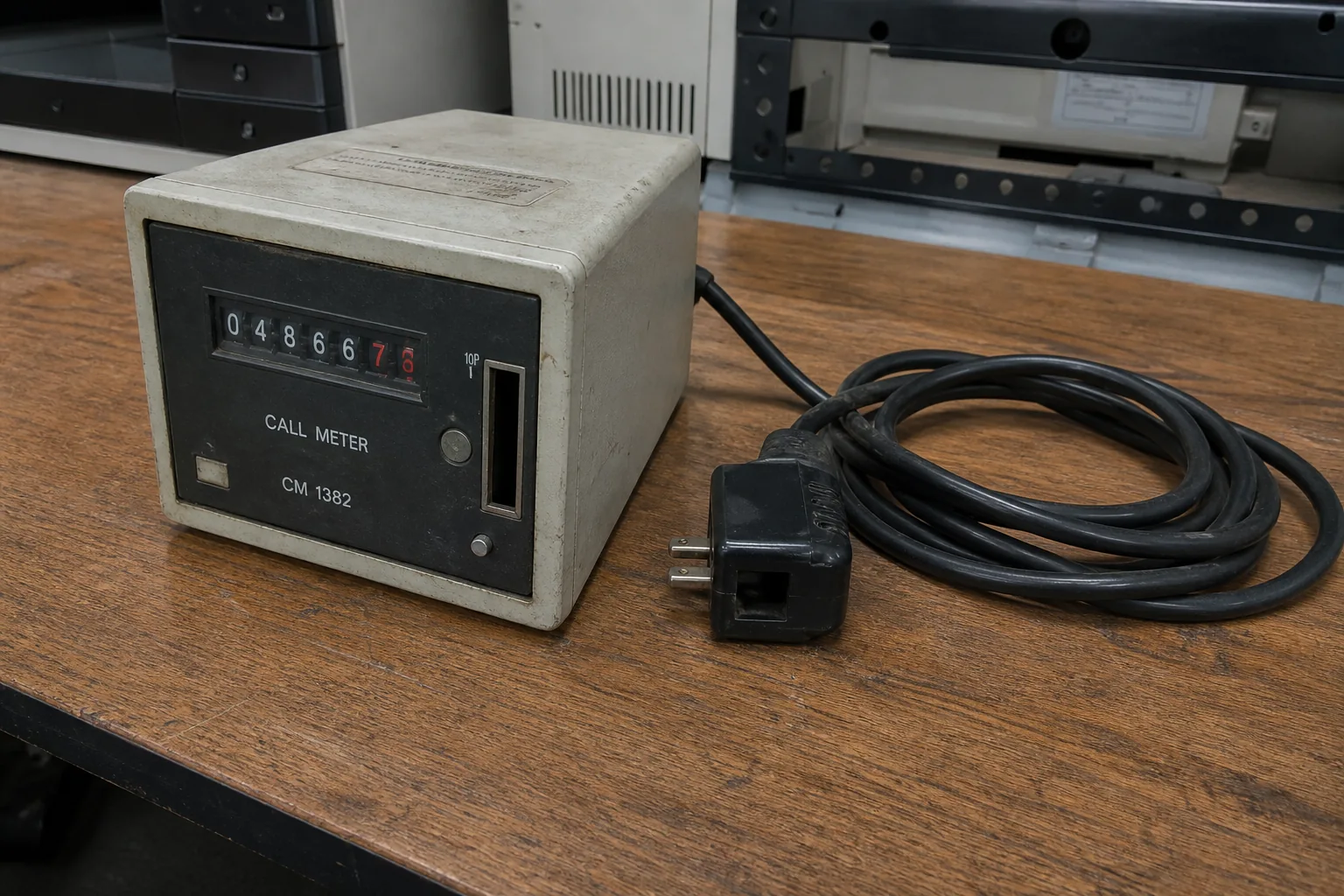
A few desks empty. The queue still clears. The office feels faintly ill about it.
Nobody says the names.
The dashboard says the work is moving.
The provider says the automation is working.
Somewhere a monthly number becomes a usage number, and work that used to arrive with a person’s name beside it is now a cost line without one.
You didn’t design a labour market around a dashboard.
You were trying to clear the cases that kept arriving.
Invoices held for a missing receipt.
Suppliers asking where payment went.
A buyer who never answered.
A system needing the same field corrected again.
You’ve got deadlines, people waiting, bills that can’t be paid out of a queue, and no reason to turn a reliable shortcut into a moral failure.
Taking help with the clean cases is what anybody does when the dirty ones are multiplying.
No machine decided it didn’t need you. A unit of measurement changed.
Your BPO seat is being converted into a meter.
First the service sold available people. Then completed transactions. Then outcomes. Now an agent consumes the smaller steps inside a case, and somebody has to decide whether the gain belongs to the customer, the provider, the platform, or the work that’s left.
2004 — A colleague leaves. The queue gets redistributed, with a note in the shared inbox saying who covers what.
2012 — The work moves to a service centre. A headcount report arrives before the explanation does.
2019 — A bot takes the cleanest cases. The exception queue becomes your job.
2026 — The dashboard shows usage, not seats. The queue still needs somebody when it breaks.
The case never got simple
Take one purchase-invoice exception off your pile. A supplier invoice with no matching purchase-order number, or no matching receiving record.
Your provider takes it through an approved mailbox, portal, EDI feed or scanned-document queue. Creates a case ID. Timestamps arrival. Checks for a duplicate. Reads the supplier and invoice identifiers. Keeps the original image even after extraction gets corrected.
That preservation isn’t ceremony. Without it, nobody can reconstruct why you held the payment.
And your case immediately has two clocks.
Its elapsed age measures the supplier’s obligation. Its active handling time measures provider work.
If your buyer takes two days to answer, the invoice is aging. That isn’t two days of provider handling.
Small distinction, large consequence. Your client kept a decision, so the provider can’t be made to look slow for failing to make it. The case also can’t be allowed to vanish under the name of client-pending time.
Then classification. Your system tests the purchase order, the goods-receipt record, the supplier master, tax treatment, tolerance rule, prior credit note.
You see controlled labels. Missing receipt. Price variance. Duplicate suspicion. Vendor-master discrepancy. Insufficient approval.
A value read as 10,000.00 rather than 1,000.00 can’t quietly become a payment because a machine found the most confident-looking answer.
So your provider records both the machine proposal and your correction.
There’s work your provider can do. Obtain a missing record. Correct a permitted field. Link a credit note. Send a standard supplier request. Each action carries a date, an actor, a source, a disposition.
And there’s work it can’t take for itself. A price variance above the stated limit. A duplicate suspicion. An unapproved supplier-bank change. A conflict between contract and invoice.
That isn’t inefficiency waiting to be automated away. It’s retained authority.
Closure has an end state too, and this is where the numbers lie most cheerfully. Ten emails are not ten resolved invoices.
A provider clearing a thousand cases a day can be making the service worse, if most of them close as “supplier contacted” and reopen next week.
An accepted closure is a match accepted, a payment approved, a query resolved, a case rejected under policy, or a formal transfer back to you.
That was the real BPO product. Not cheap hands in a distant room. A repeatable case whose effort somebody could count.
The seat was just the first unit that made the case purchasable.
The seat was never a person
FTE pricing buys you a coverage pattern.
You see a monthly seat price. Behind it sit paid hours, planned absence, training, supervision, recruiting, equipment, workflow licences, telecoms, quality assurance, management and margin.
Your side keeps the process owner, the policy specialists, the supplier manager, access administration, integration, audit, and the payment authority.
And a forty-hour week is not forty productive handling hours. Not after breaks, meetings, training, leave and downtime.
That’s why a seat model survives when your demand is volatile, or the work changes faster than anyone can define a clean unit.
You reserve people you can move across related tasks. Your provider gets predictable revenue and can train a stable team.
But the utilization risk stays visible. Your volume falls thirty per cent and you may still pay for contracted capacity until the adjustment mechanism catches up. Your volume rises and you get overtime, temps or delay before you get trained capacity.
Transaction and outcome prices change the unit. They don’t make the cost disappear.
Your provider gets paid for a clean invoice processed, an application verified, a request resolved, a payroll record completed. That gives it a reason to cut avoidable touches and reuse automation.
But your contract has to say whether the transaction is an incoming document, a completed case, a first-time-right case, or an issue that stays closed for thirty days.
It has to name what happens to incomplete submissions, duplicates, client outages, fraud screening, multilingual work, and exceptions with several contacts.
A cheap unit price can be a way of moving the hard work back across the boundary. Yours.
Here’s the automation squeeze in one sentence. A bot can remove a reliable step and make the remaining human queue harder, slower and more emotionally loaded.
The World Bank’s Philippine contact-centre case records call summarization removing 30 to 60 seconds per call and improving efficiency by around 10%.
It’s useful precisely because it’s narrow. It doesn’t say every centre loses a tenth of its cost, or that your saved minute becomes a removed job.
Volume, quality review, schedule inflexibility, attrition, and whether you can actually eliminate or repurpose a seat decide whether released capacity becomes cash.
So the gain is a distribution problem.
Your customer expects lower prices or more service. Your provider needs a return on automation and recovery of transition cost.
A serious productivity ledger shows baseline minutes, new minutes, technology cost, quality effects, redeployed work, and what share each side keeps.
It doesn’t call every contact reduction provider efficiency when a client product redesign caused it. And it doesn’t call a workforce reduction a saving when supervisors, experts, security review, data stewardship, exception monitoring and rule maintenance take the place of the old seats.
You’re not watching work become weightless.
You’re watching the unit of payment move away from the person doing it.
The meter inherited the queue
The token meter is the newest version of the abstraction.
It isn’t a claim that every agent is priced the same way. It’s what you feel on seeing consumption where a headcount report used to be. Usage, calls, model work, platform charges, automated steps.
And the question under the new meter is old.
What’s the accepted unit? Who pays for availability? Who owns the exception? And where does the surplus go when a human step falls away?
And your agent can’t answer any of that by sounding certain.
It can read evidence and prepare a reversible draft. It can’t activate a bank change because the sentence it produced was plausible.
That distinction is a direct descendant of the old BPO boundary. In the older vocabulary: don’t give the queue a decision that belongs to the client.
This is where the empty desks are still being counted.
Not only in the people no longer assigned to your clean cases. In what now sits around the work that’s left.
Exception owners. Approvers. Quality analysts. Platform invoices. Client-pending time. Transition cost. Controls. And the people who can tell when a completed case is only a polite sentence.
The BPO seat didn’t disappear. It became a transaction, then an outcome, then a meter.
The queue kept its memory of every decision nobody could safely price as one.
Put this to work
- A purchase-invoice exception moves through intake, classification, delegated action, quality control, client approval, and closure under one case record.
- FTE pricing buys available capacity, while transaction and outcome pricing pay for a defined accepted result and distribute demand risk differently.
- Automation savings can remain with a provider unless the contract makes the baseline, technology cost, quality effects, redeployed work, and gain share visible.
- Volume bands, exception treatment, client-pending time, and an accepted-transaction definition matter more than a headline unit price.
- Client payment authority, policy ownership, retained specialists, quality review, supplier management, and exception monitoring remain after transaction work shrinks.
- An agent run needs a bounded purpose, scoped tools, a binding approval gate, and a downstream committed result rather than a confident completion message.
Questions
- What actually happens to a purchase invoice when the PO does not match?
- The provider creates one case ID, timestamps receipt, preserves the original document, checks for duplicates, and routes the exception by records and reason code. It tests the purchase order, goods receipt, supplier master, tax treatment, tolerance rule, and prior credit note. A case inside delegated authority can be corrected or queried; a payment, policy, fraud, or contract decision returns to the client owner.
- Why are there two clocks on an outsourced invoice case?
- One clock measures the age of the supplier obligation and another measures active provider handling time. A case awaiting a client buyer’s answer for 48 hours remains visible as aging, but those 48 hours are not provider work when the client retains the decision. The separation prevents the provider from being judged late for a decision it cannot make and prevents the case from disappearing while it waits.
- What does an FTE price really buy?
- An FTE price buys available delivery capacity, not a fixed number of completed cases. It includes paid hours, planned absence, training, supervision, recruitment, equipment, workflow licences, telecoms, quality assurance, management, and margin. A 40-hour week is not 40 productive handling hours after breaks, meetings, leave, training, and system downtime. The client also retains policy, audit, integration, and decision costs.
- Why does a transaction price not automatically protect the buyer?
- A transaction or outcome price pays for a defined accepted result, but the definition determines the bargain. The parties must specify whether the unit is a received document, a completed case, a first-time-right case, or an issue still closed after 30 days. Incomplete submissions, duplicates, client outages, fraud screening, multilingual work, and high-effort exceptions can otherwise become exclusions, change orders, or work pushed back to the buyer.
- Who gets the saving when a bot removes work from a BPO queue?
- The provider can retain the productivity gain unless the contract makes the ledger visible. A durable arrangement records baseline minutes, new minutes, technology cost, quality effects, redeployed work, and the share retained by each party. A bot can make a seat look underused while the remaining cases become harder. The parties can redeploy capacity, reduce it on an agreed schedule, or price the automated component separately.
- Why do volume bands and exception rates matter more than a cheap unit price?
- Volume changes the cost of capacity and determines whether a provider can staff, train, or automate economically. Exception treatment determines which party carries high-effort work. A low unit price can conceal exclusions, while a rising exception rate can show that master data, supplier behavior, or policy has changed. The daily view therefore separates arrivals, completions, work in progress, backlog age, reopened cases, client-pending cases, and sampled accuracy.
- Does automation prove that a provider can cut headcount?
- No. Automation reduces labor content only when it removes a reliable step and released time can be redeployed or not replaced. A Philippine contact-centre case reported call summarization removing 30–60 seconds per call and improving efficiency by 10%, but that task result does not establish a universal headcount or cost reduction. Volume, schedule rigidity, quality review, attrition, and seat elimination determine whether capacity becomes cash.
- What stays with the client after invoice work is outsourced or automated?
- The client retains payment and decision authority, current policy instructions, approval limits, tax treatment, blocked-supplier information, source-of-truth maintenance, and the people who can confirm receipt. It also retains process ownership, supplier management, access administration, integration, audit, and the authority to change upstream causes. Automation does not remove these responsibilities; it makes the hand-off points more visible when they are defined well.
- What makes an agent run different from a person opening an invoice case?
- An agent run is bound to an immutable identifier, requester, record, policy version, and time. In the supplier-bank-change flow, three deterministic checks confirm that the case is open, the requester is assigned, and the supplier is in scope. The runtime, not free-form chat history, validates transitions through six named states. The agent can interpret evidence, but fixed rules remain better handled by deterministic workflow code.
- Why cannot an agent's completion message be treated as proof?
- A completion message can describe an action that never committed. A valid transaction record comes from the downstream system and includes a confirmation number, resulting record version, and timestamp. The trace links the agent run to that external result, together with the request, evidence, policy decision, credential scope, approval, tool arguments, and recovery event. A pending approval notification is not a gate unless it blocks execution.
- What happens when an agent cannot verify a supplier change?
- The agent enters a failed or awaiting-evidence state, escalates, or parks the case according to policy; it does not treat confidence as approval. A valid approval binds an authorized person to the exact action, evidence, policy version, and expiry. If activation times out, the runtime checks the downstream system with an idempotency key before recording completion, retrying safely, or sending the case to an operator.